What if older people refuse help outside the family? This is the taboo that could wreck care reform | Emily Kenway
Many fear losing their independence if they agree to care workers looking after them. Any social care review must take this on board
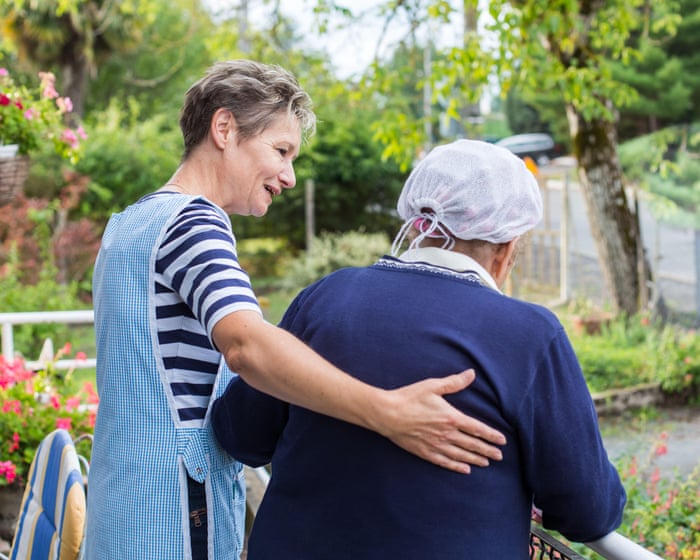
Lisa* has used her local glazier so many times that he gives her a discount. For months, when care workers arrived at her mum’s home, they would find the front door locked and the elderly woman – who has dementia – resolute in her determination to bar their entry. Often, the only solution was to break the glass in the front door. When I met Lisa, who was a participant in a research project I ran, her mother had finally accepted help, but it had taken years of frustration and smashed glass. Unlike Lisa, Lily* never got to acceptance. After two years spent trying to persuade her elderly father to accept social care, she lied. He thinks the people who visit twice a day are nurses, legally required to dispense his dementia medication.
Experiences like these are common among people caring for ageing parents. They present an uncomfortable challenge for those who, like our new prime minister, Andy Burnham, wish to fix our care system. Many people are like Lisa and Lily: they are providing eldercare not because of the lack of social care, but because their ageing relatives will not accept external help, or at least not without a years-long fight.
Emily Kenway is a social policy doctoral researcher at the University of Edinburgh and the author of Who Cares: the Hidden Crisis of Caregiving and How We Solve It
*All names have been changed
Continue reading...
Aug 4, 2026
Carers
Care workers
Social care